
Tag Wizard | Asset Equipment Tracking Built for the Mechanical Room and beyond
One photo. We do the rest.
You already know where your equipment is. What you don’t have is a record you can hand to an auditor, a service partner, or your own CFO without three weeks of cleanup first.
Tag Wizard is an AI-powered asset tagging app and equipment tracking system designed to read and structure equipment data from nameplates in the field, so owners, service contractors, compliance teams, hospital facilities teams, data center operators, and other mechanical-room operators can build accurate, audit-ready asset records without manual keystrokes.
How to Use Tag Wizard?
- Point your phone at a nameplate.
- The AI reads the nameplate, structures the data, and asks you the follow-up questions that matter for that specific piece of equipment.
- Use talk-to-text input if your hands are occupied or dirty.
- Tag Wizard works with existing asset tags, including barcodes, QR codes, or RFID, or even if you have no tags at all.
- Field technicians capture cleaner records across grocery retail, healthcare, data centers, and service contracting.
That matters when maintenance history, financial reporting, and EPA refrigerant compliance all depend on equipment records that are complete, consistent, and easy to verify.
No clipboard. No spreadsheet reconciliation on Sunday night.
What Tag Wizard actually does for asset visibility
Every keystroke in the field is a chance to introduce an error, and a chance for the tech to decide it isn’t worth the trouble. Tag Wizard removes the keystrokes.
AI-Powered Smart Scan
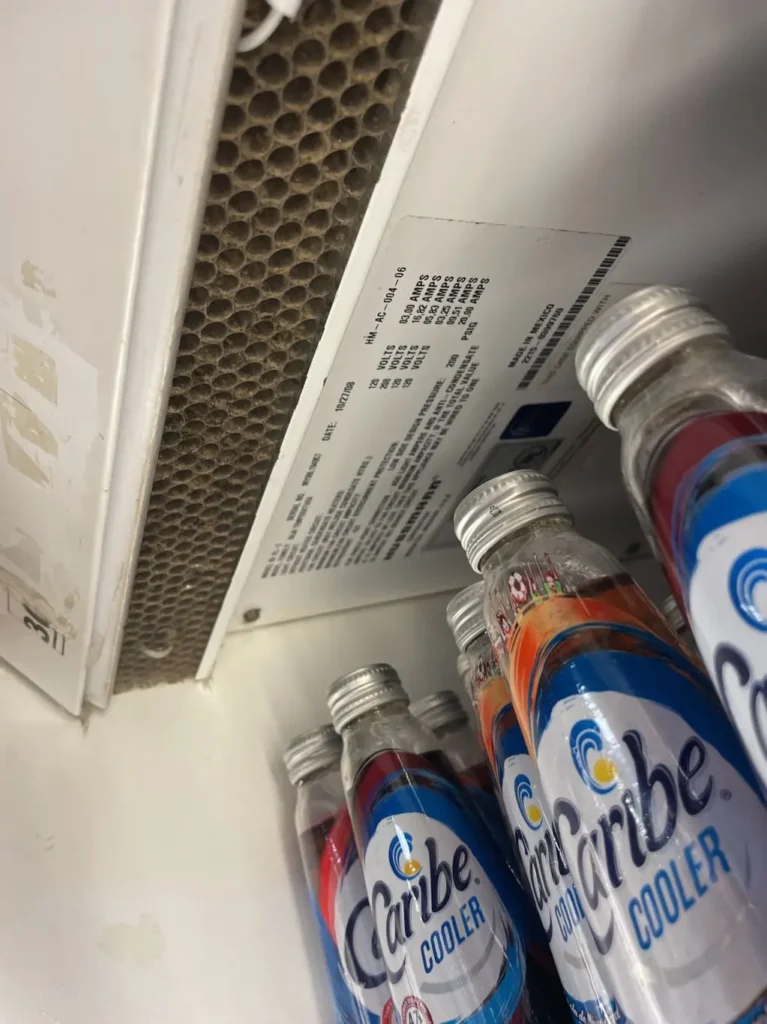
Photograph the nameplate. AI nameplate scanning pulls manufacturer, model, serial, refrigerant type, and charge where it’s printed — including on the weathered, greasy, half-obscured plates that defeat generic OCR.
This is AI-powered data entry doing the part of the job nobody wants.
Responsive prompting
A rooftop unit and a walk-in cooler don’t need the same fields. The app adapts to the asset in front of you and asks only what that asset requires, so two different techs on two different sites produce records that match.
Talk-to-text
Hands covered in oil? Say it instead of typing it.
Tag-agnostic by design
Tag Wizard works alongside whatever you’re already using — existing asset labels with barcodes, QR code asset tracking stickers, RFID, or nothing at all. We don’t sell labels, so we have no reason to lock you into ours.
If your barcode asset tracking system is already in place, Tag Wizard populates it rather than replacing it.
Portable asset data
Structured, exportable, audit-ready. Your data leaves with you.
Standalone, on purpose
Tag Wizard is not a buried module inside a larger platform you have to buy first. It’s an independent asset tracking tool that works with the systems you already run.
Where Tag Wizard Proves Its Worth: Where it earns its keep
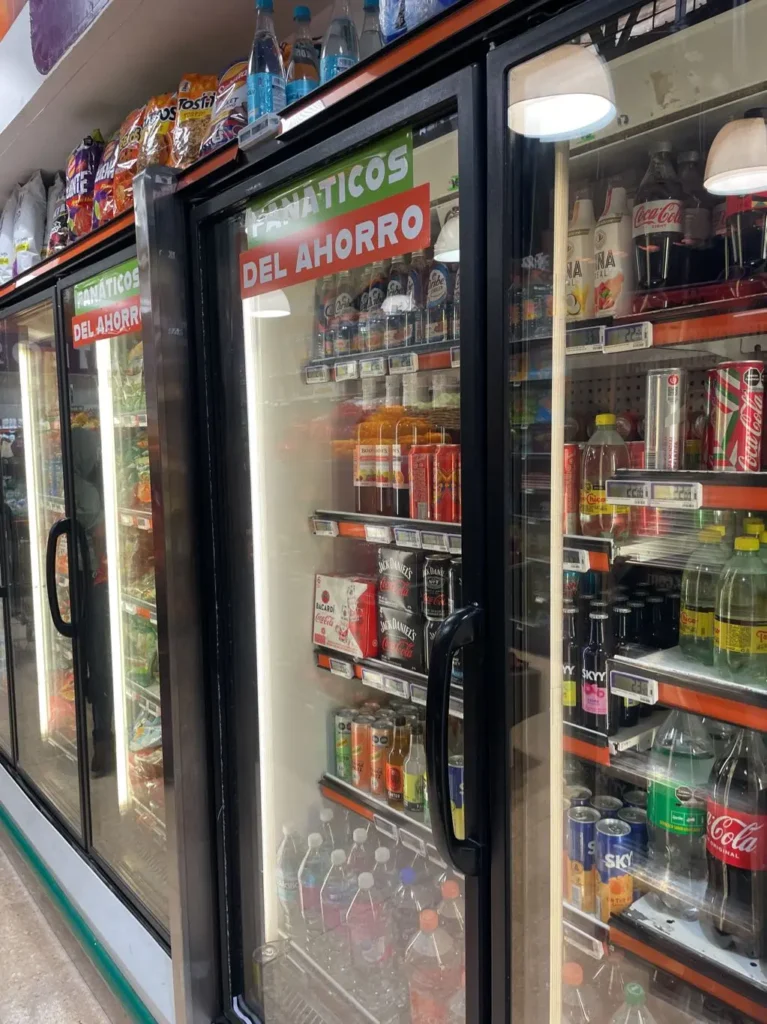
Grocery and Food Retail
Your refrigeration is your largest compliance exposure and your largest deferred-maintenance risk at the same time.
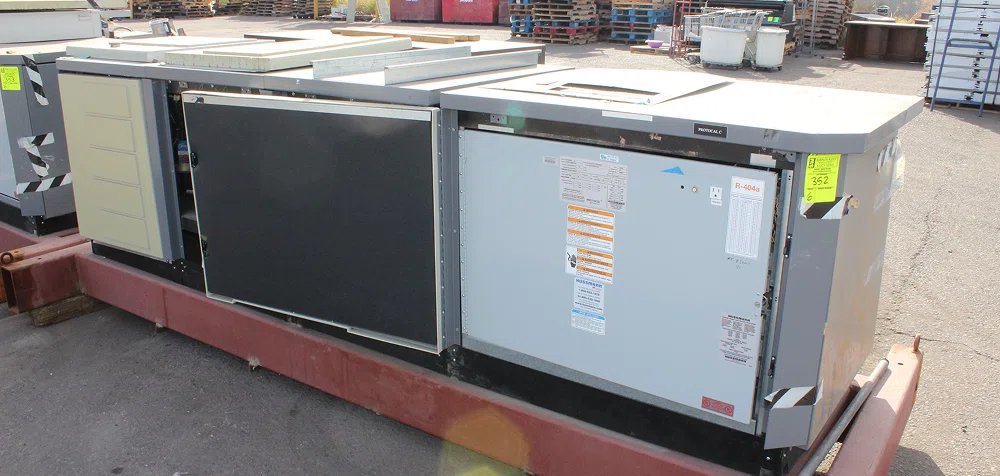
Rack systems, walk-ins, reach-ins, ice machines, prep equipment — spread across dozens or hundreds of stores, each with its own service history, its own charge, and its own remodel schedule.
No other retail format carries this much regulated equipment per square foot.
📱 Download Tag Wizard
The technology transition made the record mandatory
Under the AIM Act’s Technology Transitions Program, new products and equipment in the refrigeration, air conditioning, and heat pump sectors that use HFCs must meet GWP limits for their subsector — and must be labeled.
That label carries the refrigerant designation, the manufacture date, the charge size, and the date of charge.
Replacement components using higher-GWP HFCs carry their own label marking them for servicing existing equipment only.
Read that carefully, and it tells you something: EPA has already defined the minimum data set that must be physically attached to every covered unit. Which means it has also defined the floor for what any defensible asset record contains.
And the transition is what makes this operationally hard.
You are running mixed fleets — legacy HFC racks beside new low-GWP systems, service parts that are legal only for existing equipment, and sector-specific GWP limits with different compliance dates by subsector.
Ordering the wrong replacement component or installing a restricted system is a compliance error, and it starts at the asset record. If you can’t tell which store has which, you’re guessing on a regulated decision.
Why the list never stays built
Grocery is where the milestone approach fails fastest, and the reason is structural: your equipment changes constantly.
A case gets swapped mid-season. A store remodels a department.
A rack gets retrofitted for a different refrigerant. An acquisition brings forty stores documented in someone else’s format.
The rules move too.
EPA published a final rule in May 2026 amending the Technology Transitions regulations, with changes affecting retail food supermarket systems, remote condensing unit systems, and cold storage warehouses.
An equipment list built against last year’s requirements is answering a question that changed.
→ Read More about Phasedown of Hydrofluorocarbons
So a tagging project finishes, gets filed, and is materially wrong by the next audit cycle. Then somebody rebuilds it — usually a technician, usually under deadline, usually from a mix of old spreadsheets and educated guessing.
Which means it has also defined the floor space, refrigerant, and system relationships needed to track each unit and determine which compliance decisions and service rules apply.
That rebuild is the recurring cost nobody puts in the budget, and it repeats forever.
Stores that tag as a routine stop rebuilding their equipment list every audit cycle. The list is maintained by the work instead of by a project.
What that changes
- You know which fleet is which.
Legacy HFC systems, transitioned low-GWP systems, and the components that can legally service each, visible by store and by system rather than reconstructed from memory. - One language across every banner.
Store 12 and store 340 produce records in the same format, because the app is the standard, not a training memo. - Charge data is already there when the leak-rate calculation comes due.
Not reconstructed the week the auditor asks. Leak detection and repair requirements apply to owners and operators of HFC-containing appliances at 15 pounds of charge or greater — you need the charge to know which units you’re talking about.
→ EPA Finalizes Changes to “Technology Transitions” Provisions of the AIM Act
Tag Wizard ✨ You take one picture. We do the rest.
- Store-level staff can capture.
You already have people in every building. Under EPA’s framework, reading a nameplate isn’t refrigerant handling — so tagging doesn’t have to wait for a refrigeration tech to be free. Complete visibility is the first step before later compliance work. - Remodels and case swaps update the record as they happen,
so the issue is not just building a list once, but tracking equipment changes over time and knowing what’s happening in the field instead of quietly invalidating it. - An acquired banner gets folded in at store level,
without a consulting engagement to normalize somebody else’s spreadsheet. - A record that survives turnover.
What the departing facilities manager knew ends up in the asset record. A list of parts isn’t a record. A system is. - ✨ NEW: link condensers to evaporators, racks to the cabinets they feed.
- Most tagging tools hand you a flat list — two hundred rows, none of them aware the others exist.
That tells you what you own. It doesn’t tell you what’s connected to what, and connection is where the compliance math lives. - Linking stays optional.
Use it where it’s obvious, skip it where it isn’t, come back later. Assets captured without relationships are still complete assets, and the next step is keeping those records current.
- Most tagging tools hand you a flat list — two hundred rows, none of them aware the others exist.
The compliance calendar keeps moving. The stores that will handle it well are the ones whose equipment list is already current — not the ones planning to build one.
Healthcare and Hospitals
Asset tracking for healthcare carries a burden most industries don’t: the equipment list is a patient-safety document as much as a finance document. Chillers, air handlers, medical gas systems, sterilizers, refrigeration for pharmacy and lab.
Hospital facilities teams use Tag Wizard for asset tracking and monitoring across campuses where the last complete inventory predates half the current staff.
Field inspection jobs that used to require a two-person crew and a laptop now run off one phone, and in hospital environments teams also need to map communication paths and protocol usage to monitor threats effectively around critical building systems.
Tag Wizard is for the mechanical plant underneath: chillers, air handlers, cooling towers, boilers, exhaust systems, and the refrigeration serving pharmacy, lab, morgue, and food service. Different assets, different regulations, different department — and, in most hospitals, a far worse equipment record.
Why the plant record is usually the weakest one
Clinical equipment gets tracked because it moves and because it’s expensive. The mechanical plant doesn’t move, so it gets documented once at commissioning and then drifts — through renovations, phased tower additions, contractor turnover, and thirty years of partial replacements.
The result is familiar to every hospital facilities director: the drawings say one thing, the mechanical room says another, and the person who could reconcile them retired.
| Where Tag Wizard fits | |
|---|---|
| Clinical asset tracking (RTLS) | Not our category. Infusion pumps, beds, and mobile diagnostics need real-time location — a different problem with established solutions. |
| Mechanical and refrigeration plant | Ours. Chillers, AHUs, cooling towers, pharmacy and lab refrigeration, food service. Fixed assets that need an accurate, compliance-grade record rather than live tracking. |
| Who owns it | Facilities and plant operations, not clinical engineering. Different buyer, different budget, different regulatory driver. |
Data Centers and Critical Infrastructure
Capacity is the constraint, and you can’t plan capacity against an equipment list you don’t trust.
CRAC and CRAH units, chillers, generators, UPS, switchgear, PDUs — much of it installed by different contractors across different build phases, documented in different places, and increasingly scrutinized under GHG emissions reporting rules for data centers, so data center and critical infrastructure operators need asset visibility across a wide range of connected devices in IT and OT environments to support network security, understand traffic, and proactively detect threats across the critical assets that matter in this industry.
That includes IoT devices used in facilities operations, as well as ICS environments common in sectors like utilities.
In practice, passive visibility helps teams see what is present without disruption, while active validation can confirm device details when needed.
Tag Wizard captures the mechanical and electrical plant as a single structured asset inventory.
In critical infrastructure settings, fully implemented asset visibility is necessary to secure cyber-physical systems, and monitoring and managing all devices on the network is also critical for compliance with industry regulations; for operators facing refrigerant reporting on their cooling plant, the compliance data comes off the same photo as the nameplate data.
Tag Wizard ✨ You take one picture. We do the rest.
Service Contractors and Operational Technology
Arrive on site, capture the equipment consistently, scope the job with confidence.
The retyping between the field tech’s notes and the invoice is where margin disappears and where disputes start.
Tag Wizard closes that gap: what the tech captured is what the customer sees.
Three Reasons Tag Wizard Exists
Asset tagging is not a new idea. Owners have been trying to build a trustworthy equipment list for thirty years, and most of them are still trying. So the honest question isn’t whether you need one — you know you do. It’s why it hasn’t happened yet.
Three things changed, and the third one is the reason we built a new tool instead of selling you another old one.
1. The workforce problem – Capture is transferable. Judgment isn’t.
There are not enough HVAC technicians, and there will not be enough for the foreseeable future.
Here is the environment every owner, contractor, and facilities team is now operating in, with the labor-market background that makes transferability matter as experienced technicians retire and fewer replacements are ready to take their place, per the U.S. Bureau of Labor Statistics, which is why the person tagging your equipment doesn’t have to be the person servicing it.
There are not enough HVAC technicians, and there will not be enough for the foreseeable future.
Every hour one of them spends copying a model number onto a clipboard is an hour taken from work that only a licensed technician can legally perform.
Tag Wizard exists to give those hours back — and to make the asset record better in the process.
| What BLS reports | Figure | Why it matters to you |
|---|---|---|
| HVAC mechanics and installers employed | 425,200 | The entire national pool, across every building type. |
| Projected openings per year through 2034 | ~40,100 | Most from replacing people who retire or leave the trade, not from growth. |
| Projected employment growth, 2024–34 | 8% | Described by BLS as much faster than average. Demand isn’t the constraint. Supply is. |
| Technicians aged 55 and older | ~105,000 | Roughly one in five, carrying the deepest equipment knowledge you have. |
| Median technician wage, May 2024 | $59,810 | Past $91,000 at the top decile. That’s what an hour of data entry actually costs. |
| Share employed by mechanical contractors | 70% | If you’re an owner, most of your technical labor is someone else’s payroll and someone else’s schedule. |
| Typical training to competency | 6 months – 2 years, plus long on-the-job training | You cannot hire your way out of this quickly. The pipeline is measured in years. |
Sources: BLS Occupational Outlook Handbook and BLS Current Population Survey. Updated annually.
The shortage doesn’t appear on your books as a line called “shortage.” It appears as a delay:
- A won account waits weeks for a survey because the only person who can walk the site is booked on service calls.
- A quote goes out on guesswork because nobody captured the model numbers — and the scope gets corrected later, usually in an argument.
- A site never gets tagged at all because it couldn’t justify a dedicated visit, so it stays invisible until something fails.
- Knowledge walks out the door with the technician who knew which rack served which case, because it lived in his head and nowhere else.
Every one of those is a documentation problem wearing a labor problem’s clothes.
2. The EPA moved the bar
Documentation was always part of this job. The federal government lists “keep records of work performed” among the typical duties of an HVAC technician, and specifies complete records including time spent and the specific parts and equipment used.
What changed is what those records have to contain and how fast you have to produce them.
Under the AIM Act and EPA’s refrigerant management rules, a defensible record carries full charge, appliance category, and dated repair and verification events tied to a specific unit — and it has to survive years of staff turnover.
EPA 608 compliance has always demanded documentation. Now it demands documentation that’s retrievable.
Audits don’t fail because the work wasn’t done. They fail because nobody can produce the record showing it was.
📱 Download Tag Wizard
The line EPA drew, and what it opens up
Section 608 certification attaches to work that could release refrigerant — servicing, maintaining, repairing, disposing. BLS states it plainly: EPA requires nearly all HVAC technicians to be certified in proper refrigerant handling.
Reading a nameplate is not handling refrigerant. It is transcription of printed information off the side of a box.
EPA goes further and permits apprentices to perform even covered work under the close, continual supervision of a certified technician.
If the agency accepts supervised uncertified hands-on charged equipment, an uncertified person photographing a data plate is the easy case.
So the compliance burden went up while the licensed labor available to carry it went down — and the rules themselves say most of the capture work never required a license in the first place.
EPA’s leak-rate calculation runs against the appliance (the refrigerant circuit), not each component in it, and in Tag Wizard we know that. A rack with twenty cases hanging off it is one appliance carrying one full charge.
Hold those as twenty-one unrelated records, and you can’t compute a leak rate from them. You have an inventory, not a compliance record, and more tagging won’t convert one into the other.
It’s also why we don’t ask for refrigerant type at an evaporator.
The charge lives in the system, not the component. A tool that understands the relationship can leave the field out on purpose.
On an ordinary Tuesday, it matters just as much.
“Condenser 3 is down” means nothing until somebody knows which cases it feeds — and that answer usually lives in one technician’s memory until he leaves.
So we built something to propose the connections for you.
It watches the record take shape and offers the link where it recognizes one — you confirm it, correct it, or ignore it. No walking the building with a schematic first.
Tag Wizard ✨ You take one picture. We do the rest.
3. Nothing that came before actually worked
| What was tried | Why it didn’t hold |
|---|---|
| Label and tag vendors | The tag was the product; the data was your problem. You bought barcodes and got a numbering scheme, not an equipment record. Vendor lock-in came free. |
| Spreadsheets | Accurate as of the last person who touched them. Three sites, three formats, no way to tell which version is current — and the file lives on somebody’s laptop. |
| CMMS and EAM modules | Built to manage an asset list, not to create one. They assume the data already exists. Getting it in is left as an exercise for the customer, and that exercise is the entire job. |
| One-time consultant audits | A snapshot that starts decaying the day it’s delivered. Equipment gets replaced, charges change, stores remodel — and repeating the audit costs what the first one cost; continuous discovery improves efficiency because discovery and classification have to keep pace as networks and devices change over time. |
| Barcode and RFID rollouts | A scan tells you an asset exists. It doesn’t tell you what it is, what’s in it, or whether it’s the same unit that was there last year. |
| Generic OCR and forms apps | Clean on a printed page, useless on the weathered, greasy, half-obscured plates that make up most of a real mechanical room. |
| Sending a technician with a clipboard | It works. It’s also the most expensive labor in the building doing transcription — see Reason One. |
The common failure, and it isn’t the software
Every one of those approaches assumed field labor was free.
They asked for too many fields.
The person in the field decided the actual job mattered more than the form.
And you ended up with a database that was sixty percent complete — which makes it zero percent trustworthy, because nobody can tell you which sixty percent.
Adoption is the whole game. Adoption is a function of friction.
Every keystroke you require is a chance for the record to never get created at all.
That’s the design constraint Tag Wizard was built against. Fewer keystrokes isn’t a feature line — it’s the reason the data exists.
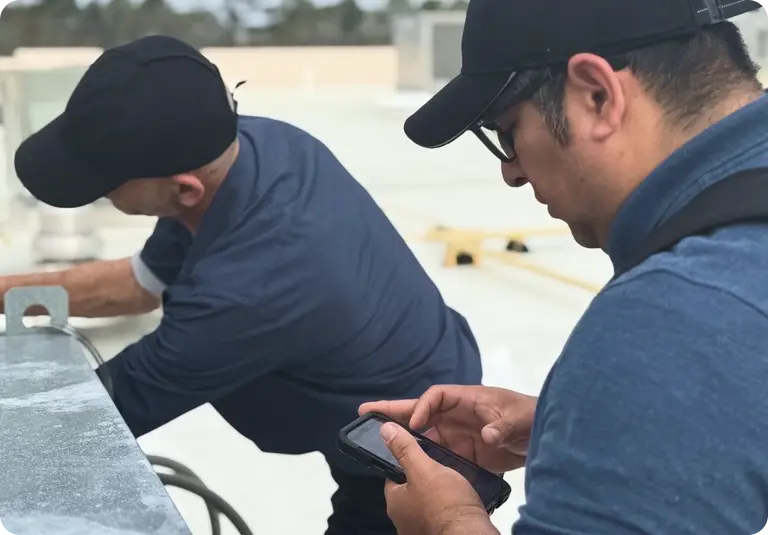
Who can capture what?
The honest version. Not every field task transfers, and a tool that pretends otherwise gets somebody hurt.
| Field task | Verdict | Why |
|---|---|---|
| Photograph nameplate; capture make, model, serial | It’s in there | Transcription of printed data. No certification implicated — and this is the bulk of the labor in any tagging project. |
| Capture refrigerant type and factory charge from the data plate | It’s in there | Also printed data. The AI knows which field is which. |
| Locate and count equipment; assign to room, rack, or store zone | It’s in there | The task is presence and position, not judgment. |
| Photograph visible condition — corrosion, oil staining, missing panels | It’s in there | As evidence, captured for someone qualified to interpret later. |
| Interpret condition into a rating or remaining-life estimate | PENDING | Trade judgment. Capture the photo; let the technician read it. |
| Establish actual charge where past service changed it | We work from factory settings | Nameplate charge is the starting point, not the answer. Flag for confirmation before it feeds a leak-rate calculation. |
| Produce leak-rate inputs for compliance | Not one of our skills | The asset record gets you most of the way. Certified event data still comes from certified people. |
| Rooftop access, confined spaces, energized panels | We are the Tag wizards, not the gatekeepers | A safety line, not a skill line — see below. Not negotiable. |
| Diagnose a fault or scope a repair | Not our job | Never was the claim. |
| Get a technician to a quote-ready scope without a site visit | PENDING | Tagged data plus condition photos gets an experienced estimator most of the way remotely. It doesn’t replace the truck roll — it makes the first one productive. |
Where we draw the line, and why it exists:
BLS reports that HVAC technicians have one of the highest rates of injuries and illnesses of all occupations — burns from electrical parts and chemicals, strains from heavy equipment, cramped spaces, rooftops, extreme temperatures.
That’s the environment your technicians are trained and equipped for, and your salesperson is not.
Tag Wizard is built for ground-level and mechanical-room capture by non-technical staff.
Anything on a roof, inside a confined space, or behind an energized panel stays with the people who do it for a living.
We’d rather tell you what the tool doesn’t do than have you find out on an incident report.
Compliance and threat detection: the AIM Act, EPA 608, and what’s coming
This is the part most asset tracking software gets wrong, because most asset tracking software was built for laptops and forklifts, not for a refrigerant landscape reshaped by new EPA regulations on owning and operating refrigeration equipment.
This page is not about Steam’s Tag Wizard, even though tags provide valuable information for game discoverability there.
How Tag Wizard Supports Compliance?
- Captures compliance-relevant fields at the moment of tagging:
refrigerant type, full charge, appliance category, install date. - Ensures the compliance record and the asset record are the same record
No second system, no reconciliation. - Links to up-to-date regulatory resources
so you always have the latest requirements at hand.
The AIM Act and EPA’s refrigerant management rules changed what a defensible equipment record has to contain, and owners need a clear refresher on those AIM Act compliance essentials.
On Steam, a title must have at least five tags before launch, and a stronger set of genre and sub-genre tags improves search visibility; analysis of the catalog also highlights how often those basics are missed.
Leak-rate calculations require full charge.
Repair and verification deadlines require dated events tied to a specific unit.
Recordkeeping obligations run for years and have to survive staff turnover.
EPA 608 compliance has always demanded documentation; the newer refrigerant regulations and state-led refrigerant compliance initiatives demand documentation that’s retrievable.
An EPA audit does not fail because you didn’t do the work. It fails because you can’t produce the record showing you did — a growing risk as EPA HFC technology transition regulations tighten phasedown schedules and recordkeeping expectations.
Tag Wizard captures compliance-relevant fields at the moment of tagging (refrigerant type, full charge, appliance category, install date) so the compliance record and the asset record are the same record, which is exactly what you need from an app built for the race to HVAC/R compliance.
No second system, no reconciliation. On Steam, the tool is designed to suggest missing tags from store-page descriptions and let users rank importance to help customers learn what matters, connect with games they may enjoy, and support better recommendations.
Meet Wizzy
A second set of eyes that already knows what it’s looking at.
Every tagging tool ever built was a form. It accepted whatever you typed, including the wrong thing, and handed you the consequences six months later when somebody tried to use the data.
Wizzy watches the record take shape and speaks up in the moment — while you’re still standing in front of the equipment and it costs nothing to fix.
- Compliance gaps.
Where the record falls short of what a defensible refrigerant file needs — before an auditor is the one telling you. - Data corrections.
A model number that doesn’t belong to that manufacturer. A charge figure that’s off for that class of equipment. - Missing fields.
Not every blank — the ones that actually matter for this asset. - Asset classification.
What kind of equipment this is, so the right questions get asked, and the wrong ones don’t. - System relationships.
Which unit this one likely belongs with.
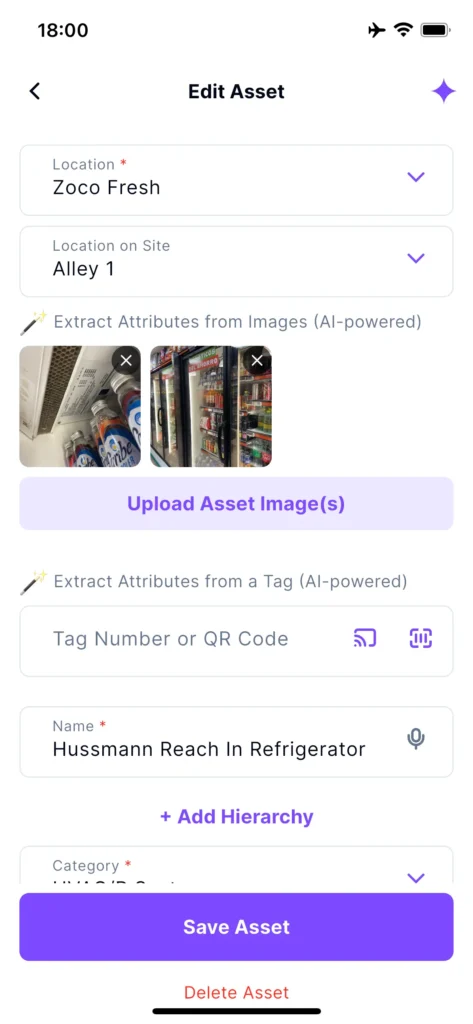
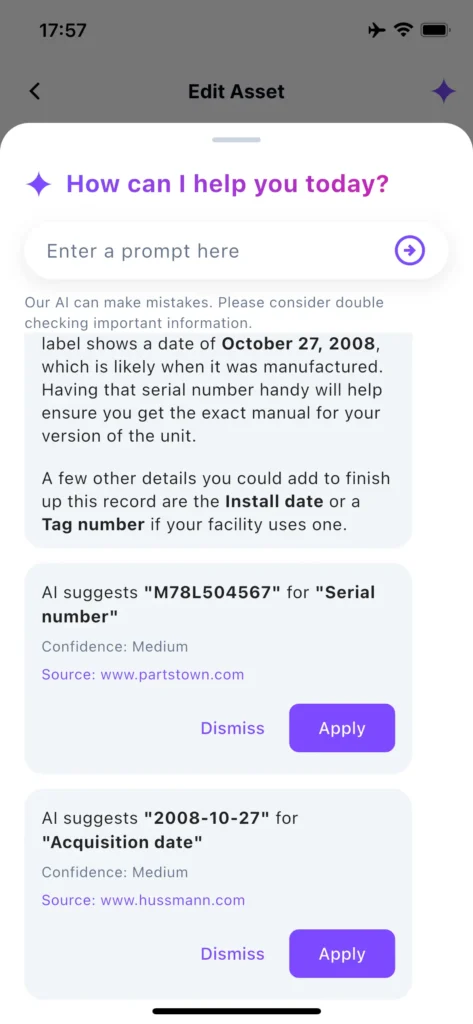
Wizzy proposes. You decide. Abandon the Key Strokes
Old tagging tools were built by companies that sell labels. Their goal was label volume. Ours is clean data — and increasingly that is driven by that means integrating with asset-centric compliance platforms like Trakref & Fexa instead of static label databases.
The failure mode is always the same: the tool asks for too much or the wrong data – (you dont need to know the refrigerant type for an evaporator), the tech in the field decides the job matters more than the form, and you end up with a database that’s 60% complete and therefore 0% trustworthy — especially painful for owners and operators of commercial AC units who rely on that record for maintenance and compliance.
Adoption is the entire game, and adoption is a function of friction.
That’s the design constraint Tag Wizard was built against. Fewer keystrokes isn’t a feature line — it’s the reason the data exists at all.
Our operating principles:
- No detail is too small, and we’re in this for the long haul.
- The tool works for you, not the other way around. You own and control your asset data.
- The AI behaves like someone watching your back — filling blanks, catching omissions, asking the next question.
- Fewer keystrokes, always.
- We use what we build, in the field, on real equipment.
📱 Download Tag Wizard
What you get
One language for every asset
Two techs, two sites, one record format. Fewer mistakes, faster audits.
One exportable source of truth
Cleaner billing, cleaner compliance, no reconciliation tax.
One tool everyone will actually use
Owners, contractors, and compliance teams on the same app.
Asset types beyond HVAC/R
Generators, elevators, registers, slicers, vehicles — and non-serialized assets like drains and lights. (Chairs, tv’s, and space ships too)

Not So Frequently Asked Questions
What happens to our data if we stop using Tag Wizard?
It leaves with you. Structured, exportable, audit-ready, in a format your other systems can consume.
A record you can’t take with you isn’t really yours, and an asset list that’s hostage to a subscription is a liability rather than an asset.
Do I need to be EPA 608 certified to tag equipment?
No. Section 608 certification attaches to work that could release refrigerant — servicing, maintaining, repairing, disposing.
Reading a nameplate is transcription of printed information, not refrigerant handling.
That’s the whole reason a store manager, facilities coordinator, or salesperson can capture a site without waiting for a technician to be free.
Does Tag Wizard replace my CMMS or compliance platform?
No, it feeds them. CMMS and EAM systems are built to manage an asset list, not create one — they assume the data already exists, and getting it in is the hard part.
Tag Wizard is the capture layer. Records export as structured data into asset-centric compliance platforms or whatever system you already run.
We already have barcodes, QR codes, or RFID. Do we start over?
No. Tag Wizard is tag-agnostic — it reads what’s already on your equipment rather than replacing it.
We don’t sell labels, so we have no reason to lock you into ours. If you have no tags at all, that works too.
Do we have to tag everything before the data is useful?
No, and we’d argue against trying. “Tag everything” is a project, and projects need a budget, an end date, and a champion who stays.
Coverage compounds — you get value at the first asset, not the last.
Tag as a routine and the list is never finished and never stale, which turns out to be the same property.
What happens when the nameplate is unreadable or missing?
AI nameplate scanning handles far more than generic OCR — weathered plates, oil-obscured serials, half-gone barcodes.
When a plate genuinely can’t be read, the app captures what’s available, records the photo as evidence, and flags the asset for follow-up rather than inventing a value.
Who should actually do the tagging?
Whoever is already standing in the building. Capture is transferable; judgment isn’t.
Photographing a nameplate, counting equipment, and recording position work for anyone.
Interpreting condition into a remaining-life estimate, diagnosing a fault, or anything on a roof or behind an energized panel stays with your technicians.
What does Tag Wizard capture for AIM Act and EPA 608 compliance?
Refrigerant type, full charge, appliance category, and install date — captured at the moment of tagging, so the compliance record and the asset record are the same record.
EPA has already defined what must be physically labeled on covered equipment, which sets the floor for what a defensible asset record contains.
Why does the app link racks to cases and condensers to evaporators?
Because EPA’s leak-rate calculation runs against the appliance — the refrigerant circuit — not each component in it. A rack with twenty cases is one appliance carrying one full charge.
Held as twenty-one unrelated records, it can’t produce a leak rate. Linking is optional and can be done as you go.
Does the AI ever get it wrong?
Yes, and the design assumes it. Wizzy proposes corrections, missing fields, classifications, and connections — you confirm, correct, or ignore. Nothing is written on the AI’s say-so alone.
The point isn’t an AI that’s never wrong; it surfaces the question while you’re still in front of the equipment.
Once the image is captured and sorted, it keeps going (decoding the serial number, pulling model family and specifications, finding the unit weight, locating the manual and the parts source) and comes back with what it found.
The record you open tonight is more complete than the one you left the site with. The first pass gets the plate. Every pass after that goes deeper.