

How a Major National Grocery Chain Replaced a Homegrown Asset Tracking System
And Got a Year Ahead of Schedule Doing It.
Case Study / Year One
A case study in what changes when identifying and registering an asset stops requiring a specialist — and starts requiring just a phone.
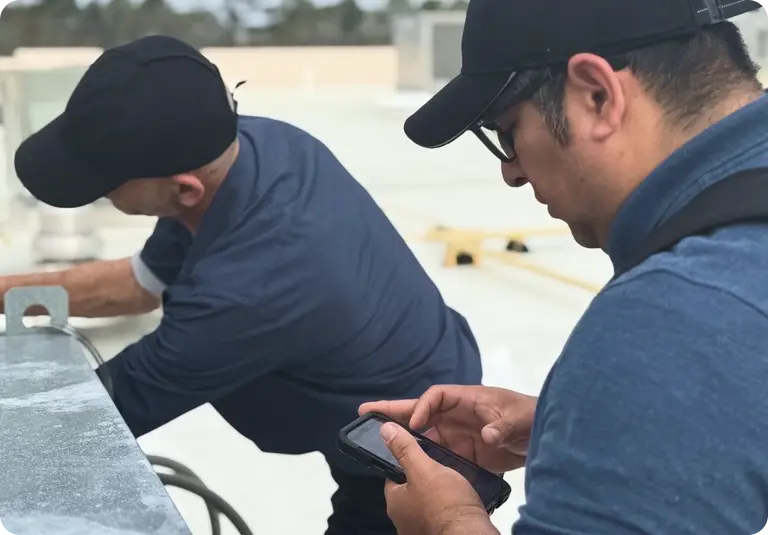
The Core Issue
It was never a lack of effort. It was that a paper-adjacent, validate-after-the-fact process gets harder to scale with every new store, not easier — and 250-plus stores is a lot of new stores.
The Problem We’re Solving
Every asset register starts the same way: someone has to walk up to a piece of equipment, figure out what it is, and write that down correctly enough for someone else to trust later.
For decades, that job assumed a specialist — a licensed technician or an experienced facilities lead who already knew a compressor from a condenser fan motor on sight. The tagging work and the technical expertise were bundled together, because nobody had built a way to separate them.
That bundle was the real bottleneck — not the capture itself. Reading a nameplate and taking a photo takes seconds, and it’s something every technician already knows how to do. The problem was that doing it correctly used to require a person qualified to do a dozen other things too, and that person’s time is the scarcest resource on any multi-site team.
Scale that across 250-plus stores and thousands of pieces of equipment, and the math stops working: either specialists get pulled off higher-value work to do data entry, or the register never gets finished.
Why This Couldn’t Wait?
The economics never worked at scale. Bringing in a specialized crew to tag a single 50,000-square-foot location has run $3,500 to $4,800 — a real number, not a worst case.
Multiply that by a few hundred locations, and the math answers itself before anyone even asks the question. That cost alone made “hire more specialists” a non-starter for any operator running more than a handful of sites.
The regulatory floor kept rising underneath it at the same time. EPA labeling requirements set a baseline for what has to be tracked on covered equipment, and states have been building their own enforcement on top of that baseline.
The pressure isn’t limited to the U.S., either — new requirements in the UK and elsewhere are pushing in the same direction: assets have to be identified and quantified, not estimated. A spreadsheet nobody trusts doesn’t satisfy an auditor, foreign or domestic.
Both pressures point at the same weak link: a CMMS sitting on top of an asset register nobody fully trusts.
CMMS platforms are good at managing a list once it exists — they were never built to create one, and the demand for accurate, defensible, quickly-accessible data was rising faster than any specialist-driven process could keep pace with. Something had to give.
The part that’s genuinely hard (matching what’s in the photo against a canonical taxonomy, catching a duplicate before it corrupts a report, flagging a relationship between a rack and the cases it feeds) was never something a person needed to hold in their head while standing in a walk-in freezer.
It just didn’t have anywhere else to live. Software built around the invoice, not the asset, never gave it one.
The Old Framework
Correct asset data required a specialist standing in front of the equipment. That assumption (not the equipment, not the technician)is what made every rollout slow, expensive, and dependent on people who were already stretched thin.
The Standards Behind the Work
Rebuilding the product wasn’t just about making capture faster.
Speed without structure just produces a bigger pile of inconsistent data, faster.
The rebuild that shipped in February 2026 was built around a set of disciplines meant to make the data trustworthy the moment it’s captured — not cleaned up months later.
A canonical taxonomy, not a free-text field
Every asset is classified against a structured, four-tier taxonomy (category, type, subtype, kind) grounded in ASTM E3257, the Standard Practice for Asset Taxonomy, and informed by NIST’s Nestor toolkit for maintenance data.
The point isn’t the standards citation.
It’s what the citation buys: a name for a piece of equipment that means the same thing in every store, to every technician, without a person having to remember or enforce the convention by hand.
Guardrails, not guesswork
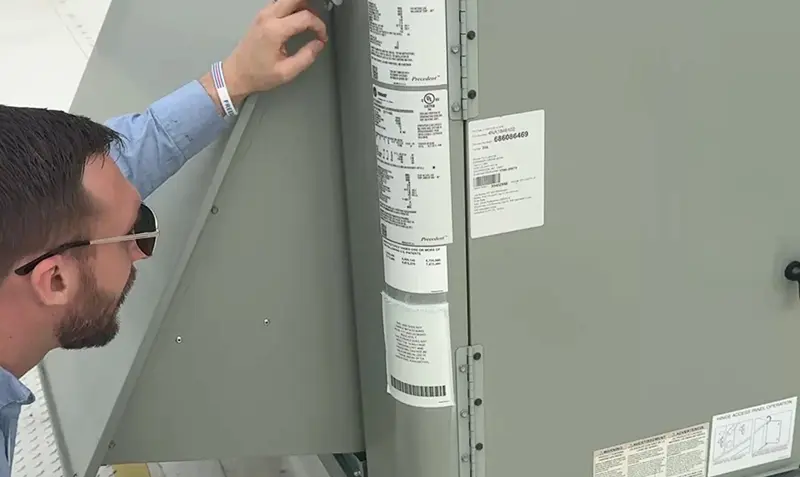
The system applies validation, ranking, and consistency checks against industry-standard reference data at the moment of capture — matching what a technician photographs against a large body of known equipment, cross-checking attributes, and flagging what doesn’t fit rather than silently accepting it.
When a nameplate is unreadable or missing, the system can still identify the equipment with confidence, using everything else visible about it — rather than leaving the record blank or guessing.
A blank field carries meaning instead of hiding it. A blank refrigerant field on an evaporator means the field doesn’t apply to that class of equipment.
A blank refrigerant field on a condensing unit means the data wasn’t captured yet. Same blank space, opposite meanings — a fixed, one-size-fits-all form erases that difference permanently, and nobody downstream can reconstruct it later.
That’s also why a partially-filled register is worse than an empty one: sixty percent complete isn’t sixty percent trustworthy, because nobody can tell you which sixty percent to believe.
Duplicate suppression at the point of capture
Re-scanning equipment that’s already been logged is one of the most common ways asset registers quietly go bad.
The system checks each new capture against what’s already on file and flags a match immediately — not during a cleanup pass weeks later, when the duplicate has already fed into a report.
My favorite part isn’t even the tagging. It’s the audit tool. You take the picture again, and it tells you if that asset’s already been logged. I tested it. It works great.
— Sam S., field technician
Relationships between assets, not just a list of them
A flat asset list tells you what you own, not what’s connected to what — and for refrigeration, that gap is where compliance math breaks.
EPA’s leak-rate calculation runs against the whole appliance, the refrigerant circuit, not each component hanging off it. A rack with twenty cases is one appliance carrying one full charge; held as twenty unrelated records, it can’t produce a leak rate.
The system watches the record take shape and proposes the connection (condenser to evaporator, rack to the cases it feeds) and a technician confirms it, corrects it, or leaves it for later.
Doctrine, Not Decoration
Asset truth is a doctrine here, not a feature checkbox. The standards work is what lets two people trust data they didn’t personally double-check — which is the whole reason the Year One numbers on page 8 are possible.
The Partnership: How We Solved It Together
This wasn’t a vendor handing over software and walking away. It was two teams — the account’s facilities group and the Tag Wizard team — working through a real problem together, in the open, over more than a year.
| Apr 2025 | Dec 2025 | Feb 2026 | Apr 2026 | Sep 2026 |
|
|
||||
| First pitch; in-house build begins | Homegrown system hits ceiling: 2,600 | Tag Wizard rebuild complete | Live in field; free pilot begins | ~30,000 assets; 1 yr ahead |
Losing the first pitch — for a good reason
Tag Wizard first presented to this account in April 2025.
They passed — not because the pitch was wrong, but because the team wanted to try building the capture layer themselves first.
That’s a reasonable instinct for any team that’s been burned by software that didn’t fit their actual workflow, and it deserved to be respected rather than argued with.
Listening to what the first attempt actually revealed
When the team came back around, the response wasn’t a re-pitch of the same deck. It was a rebuild, grounded in a specific lesson the homegrown attempt had made visible: give a technician too many choices at the moment of capture, and they stop choosing carefully — they pick the first option on the list, every time.
That single behavioral insight reshaped the entire interrogation flow. Fewer, better categories. Judgment built into the system, not left for a tech in a walk-in freezer to work out under pressure.
The rebuild took until February 2026 — real time spent, not a quick patch, because the team’s stated principle throughout was simple: do it once, do it right.
Nobody wanted to hand this account a second version that needed to be redone again in six months.
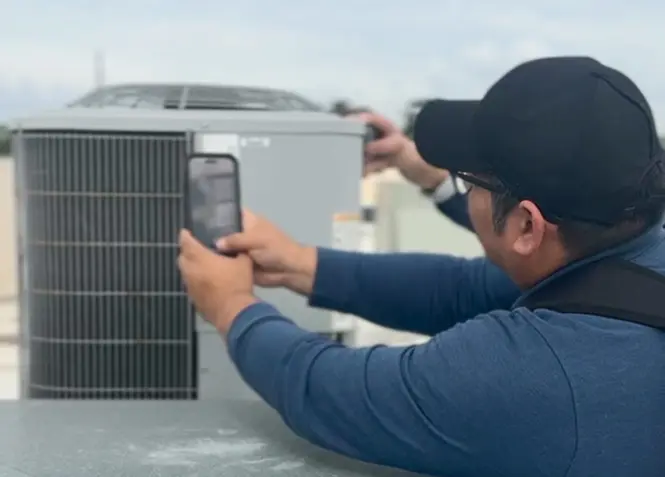
A Bet Both Sides Were Willing to Make
The team re-presented in March 2026 — this time without leading with a slide deck. The offer was direct: run it free. Both sides were confident enough in the rebuild to be willing to be wrong about it.
The agreement was specific and mutual: if the tool could double the team’s tagging productivity, the relationship would become paid. If it couldn’t, there was no cost to finding that out.
That’s a meaningfully different trigger than a typical sales cycle. It wasn’t a discount to close a deal — it was a shared, measurable bet on outcome, which meant both teams had the same incentive from day one: make the number real, not make the deal happen.
Two hours of training, real skepticism, fast adoption
The rollout began in Charlottesville, then moved to South Carolina to train the two field technicians who’d actually be doing the tagging day-to-day. They were skeptical starting out — reasonably so, having just spent seven months on a system that hadn’t delivered what they needed. Two hours of hands-on training later, they were working independently in the field.
That skepticism didn’t last. By the beginning of April 2026, the team was fully live, and within the first week, the feedback coming back was the kind that doesn’t get written by a marketing team:
This is going to make us faster and more accurate. The picture does the work — everyone on the team knows exactly what we’re looking at. We’re going to cover a lot more ground.
— A major national grocery chain
Reshaping how a CMMS thinks about assets
The work didn’t stop at capture.
Getting clean data into the account’s CMMS required both teams to sit down and separate concepts that had been tangled together for years — a generic equipment definition versus a specific physical asset versus the path a technician actually follows to find that asset in the field.
That collaborative re-thinking, done together rather than dictated by either side, is what let the new taxonomy actually take hold instead of becoming one more layer of complexity on top of the old one.
📱 Download Tag Wizard
What Sets Tag Wizard Apart
Capture is transferable. Judgment isn’t.
That line is the whole thesis, and the account’s Year One results are what it looks like in practice. The team that ran the homegrown system worked just as hard as the team using Tag Wizard today. What changed is more fundamental than speed: Tag Wizard was built from the ground up to remove the specialization that used to be required to identify and register an asset in the first place. Knowing what a piece of equipment is — make, model, category, manufacturer — used to be expertise a person had to carry. Now it’s something the phone in their hand already knows.
This isn’t just a design choice — it’s backed by where the regulatory line actually sits. Under EPA Section 608, certification attaches to work that could release refrigerant: servicing, maintaining, repairing, disposing. Reading a nameplate is transcription of printed information, not refrigerant handling. That’s the whole reason a store manager or facilities coordinator can capture a site without waiting for a certified technician to be free — the capture work never required the license in the first place. It just used to require the person doing it to already know what they were looking at.
Identifies equipment without a working tag
Faded, painted-over, or missing nameplates don’t stop the system. It identifies make, model, category, and manufacturer from everything else visible on the equipment — instead of leaving the field blank or asking a tech to guess.
Duplicate suppression at capture
Catches a re-scanned asset the moment it’s photographed again — not weeks later in a cleanup pass, after it’s already corrupted a report.
One photo, not a form
The photo is the record. Fields populate from what the system reads, not from a technician typing into a dozen boxes on a phone screen in a mechanical room.
Hardware-agnostic
Reads NFC, QR, and barcodes, and works with no tag at all. No proprietary hardware to buy, no lock-in to a single tag format.
Canonical naming, every store, every tech
The same piece of equipment gets the same name whether it’s tagged in store 4 or store 240, by whichever technician happens to be holding the phone that day.
Built for the CMMS you already have
Exports into the account’s existing system rather than asking them to replace it — neutral infrastructure underneath whatever platform of record a team has already invested in.
Wizzy — A second set of eyes that already knows what it’s looking at
Wizzy watches the record take shape and speaks up in the moment — while the tech is still standing in front of the equipment, when it costs nothing to fix.
It flags compliance gaps, catches data that doesn’t fit the equipment class, calls out the fields that matter for that specific asset, and proposes system relationships between units.
Wizzy proposes. The technician decides. Nothing gets written on the AI’s say-so alone.
Wizzy
Your co-worker on the job — 24/7
Wizzy proposes. The technician decides.
What specialization used to cost
Bringing in a specialized crew to tag a single store’s worth of equipment (350 to 400 assets, typically) has run $3,500 to $5,000 per store.
Call it $9.30 to $13 per asset, and a dedicated visit to get it.
With Tag Wizard and Wizzy running on a phone your team already carries, that same asset costs less than a dollar to identify and register.
The Doctrine
“When the tag is missing, the asset isn’t.”
That line isn’t a slogan bolted on after the fact — it’s the design principle the whole capture flow is built around.
Cost to Identify and Register One Asset
($9.30 – $13/asset)
(under $1/asset)
Measurable Business Impact
Same two people. Same 250-plus stores. A tool built around how techs identify equipment in the field, instead of a generic capture process retrofitted for the job.
Assets Per Store
per working day
The volume jump is the headline, but it isn’t the most telling number. Under the homegrown system, the two technicians largely needed to work in tandem to trust the results. With Tag Wizard, they stopped needing to — they split up, worked different stores independently, and covered more ground while getting more consistent data, because the validation and ranking checks built into capture do the consistency work a second set of eyes used to provide.
per week
As the team moves back through stores to re-verify equipment, the system catches an average of 420 duplicate assets every week — records that would otherwise sit quietly in the data, inflating counts and corrupting every report built on top of them.
Combined with 87,000-plus images captured to date (roughly three per asset), the account now has a photographic, verifiable record behind every asset in the system, not just a name and a number.
Program Status
The rollout is now running a full year ahead of its original schedule — not because the team got bigger, but because the bottleneck between standing in front of equipment and having clean data in the system stopped being the bottleneck.
System Health, Trailing 30 Days
No missed captures, no downtime gaps — capture alignment holding above 99% over the same window. The kind of consistency that only shows up once validation is built into capture itself, not checked for afterward.
Why Now?
This account had already decided to invest in improving its CMMS and its asset data before Tag Wizard came back with a rebuilt product.
That decision was never in question — the team understood the value of clean asset data and was willing to fund the work to get there. What they needed was speed: a way to close the gap between deciding to invest and actually seeing the return, without a rollout that ate another year before showing results.
For two decades, the software running field service and CMMS platforms was, underneath the dashboards, built around the invoice — the work order, because the work order was how vendors got paid.
The data model bent toward the transaction, and the asset itself was reconstructed as a thin shadow of the billing trail. That was never the right architecture.
It was the affordable one, because capturing the asset richly, cheaply, at the moment of work, used to be impossible.
What changed this account’s trajectory wasn’t a bigger vendor or a longer feature list.
It was flipping that architecture back around — organizing the record around the actual equipment, not the transaction — and pairing it with an onboarding timeline measured in weeks, not the eight-or-nine-month buying cycle and equally long migration that used to be standard.
Two hours of training and live within the same month is only possible when the tool being adopted doesn’t require replacing what the team already trusts underneath it.
The labor math behind the urgency
This isn’t a hypothetical pressure. It’s in the U.S. Bureau of Labor Statistics data: roughly 425,200 HVAC technicians employed nationwide — the entire pool, across every building type.
About 40,100 openings projected per year through 2034, and most of that from technicians retiring or leaving the trade, not from growth.
Roughly 105,000 of today’s technicians are 55 or older, carrying the deepest equipment knowledge in the field. Training a replacement takes six months to two years, plus long on-the-job experience after that.
You cannot hire your way out of this quickly — the pipeline is measured in years, not quarters.
Every hour a licensed technician spends copying a model number onto a clipboard is an hour taken from work only a licensed technician can legally perform. That’s the labor case for removing specialization from capture, in addition to the speed case.
That’s the environment most multi-site facilities and asset-heavy operators are in right now. The willingness to invest exists.
What’s been missing is a capture process fast enough, and trustworthy enough, to make that investment pay off inside a budget cycle instead of outlasting it.
A homegrown build can get partway there. A managed service that sends its own people to tag equipment doesn’t scale at the pace a 250-plus-store rollout demands.
The gap between those two options is exactly where this account was standing in December 2025 — and it’s where a lot of teams are standing today.
Who We Are?
Tag Wizard is a field asset capture and identification platform built after surveying the market and finding that existing tools didn’t actually make field work easier.
It supports NFC, QR codes, barcodes, and camera-based capture, and standardizes what it captures against a canonical, industry-standard taxonomy before it ever reaches a CMMS.
The product is built for the people who serve corporate and commercial real estate, grocery and supermarket operations, data centers, convenience stores, and HVAC and mechanical contracting — multi-site operators who need asset data that’s accurate enough to trust and fast enough to actually finish collecting.
What’s Next: From Friction to Frictionless
This account’s Year One is a story about a rollout — but the more interesting story is what becomes possible once adding an asset stops being a project and starts being a photo. When capture is this fast, the question changes. It’s no longer “How do we finish the inventory?” It’s “What does it mean to always have one?”
Documentation that stays current, not a project that goes stale
Most asset registers are a snapshot. A team does the big push, gets the count up, and from that day forward the data quietly drifts out of date — new equipment installed without a record, old equipment removed without anyone updating the system. When adding an asset takes one photo instead of an hour of form-filling, there’s no longer a reason for documentation to lag behind reality. New equipment gets logged the day it arrives, not at the next scheduled audit.
Tracking the whole lifecycle, not just the tagging moment
Assets don’t sit still. They retire. They get swapped out under warranty. They move between stores. They come back into service after a repair that took them offline for months. A register that’s slow to update can only ever describe where things stood on the day someone last walked through with a clipboard. A register that’s fast to update can actually track the lifecycle as it happens — equipment coming online, going offline, and coming back, in something close to real time.
The Shift
From friction to frictionless. The point was never speed for its own sake — it’s that once adding an asset is this easy, the register stops being a project with a start and end date and becomes a living record that’s actually as current as the equipment it describes.
Ready to Talk About Your Own Rollout?
This account’s story isn’t unique because the equipment was unusual or the team was exceptional. It’s a story about what happens when a capture process is finally built around the person holding the phone, instead of the system on the back end. Every multi-site operator carrying a homegrown spreadsheet, a stalled manual rollout, or a CMMS full of gaps has a version of this same story waiting to be told.
The Bet, Restated
If it doubles your team’s output, it’s worth paying for. If it doesn’t, you’ve lost nothing finding out. That’s the offer that got this account from 2,600 assets to closing in on 30,000 — in less time than the first attempt took to plateau.
✨ You take the picture. Tag Wizard does the rest.
For questions about this case study, methodology, or to discuss a pilot for your own team, reach out: